
Table of content

Guide & Tips
|
Published On:
Sep 18, 2026
|
Last Updated:
September 7, 2026
Here's a number that stops people mid-scroll: 73% of small businesses in the U.S. now have a website. Up from 64% just five years ago. That's not a slow trend. That's a shift.
But having a website isn't the same as having the right website.
Mobile devices now drive more than 62% of all web traffic, and 61% of mobile users say they'll never come back to a site that doesn't work well on their phone. So the real question for Chicago business owners isn't "do I need a site." It's "which kind."
Single-Page vs. Multi-Page: What's the Actual Difference
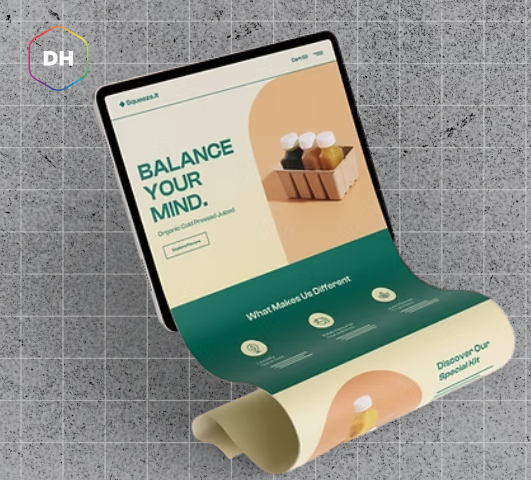
A single-page site puts everything on one long scroll. Your intro, your services, your reviews, your contact form. One URL, one story, one path down the page.
A multi-page site spreads that same content across separate pages. Home. Services. About. Contact. Each page has its own job.
Neither one is "better." They're built for different goals. And picking wrong costs leads you.
When a One-Page Site Actually Wins
One-page sites shine when the goal is simple: get one action out of the visitor. Book a call. Buy the product. Sign up.
- You have one clear offer, not ten
- Most of your traffic comes from ads or social, not organic search
- You want load times under two seconds
- Your audience is mostly on mobile
- You're a startup or solo operator who needs something live fast
A recent industry benchmark found single-focus landing pages converting at 6.6% on average, compared to 2 to 4% for full multi-page sites pulling the same traffic. That gap is real. When someone lands with one goal in mind and nothing to distract them, they act faster.
But here's the catch. One page means one shot at ranking for one topic. If you're a Chicago plumber who wants to show up for "emergency plumber," "water heater repair," and "drain cleaning Chicago," a single page can't carry all three. Not well, anyway.
When You Need Multiple Pages Instead
Most established Chicago businesses need more room to work with. Here's why.
- You offer multiple services that each deserve their own explanation
- You want to rank for more than one or two search terms
- Customers research before they buy, and they want details
- You're building long-term organic traffic, not just running ads
- Your industry requires trust signals like case studies, testimonials, and credentials spread across dedicated pages
Search engines tend to reward sites with dedicated, in-depth pages for each topic. More pages means more internal linking, more indexed content, and more chances to show up for the exact phrase someone types into Google. A law firm, a medical practice, or a growing service business almost always needs this structure.
The SEO Angle Chicago Businesses Can't Skip
Chicago is competitive. You're not just up against the shop three blocks over. You're up against every website development agency, every contractor, every clinic running ads and organic content at the same time.
A multi-page structure gives you room to build real topical authority. One page can target website development services Chicago, another can target Chicago website developers another can go after a long-tail phrase nobody else bothered writing about.
Want the deeper local SEO playbook? We wrote a full guide on that here: local SEO for Chicago small business owners.
Real Scenarios We See Constantly
A few examples make this less abstract.
- A new personal trainer launching one program? One page, one CTA, done.
- A Chicago restaurant with a menu, catering info, and event bookings? That needs pages.
- A software company with three product lines? Each line needs its own page to rank and convert separately.
- A single-location boutique running Instagram ads to one collection drop? One page works fine.
- A multi-location dental practice? Every location needs its own page for local search to work.
See the pattern? It's not about company size. It's about how many distinct things you're asking Google, and your visitor, to understand.
Cost and Timeline: The Honest Breakdown
Single-page sites cost less and launch faster. Less content, fewer templates, fewer decisions. You could have one live in a couple of weeks.
Multi-page builds take longer because there's more to plan: navigation, internal linking, page-specific SEO, more design work. Small business website design typically runs $2,000 to $9,000 depending on scope, and multi-page projects sit at the higher end of that range.
Is it worth the extra cost? If you're playing the long game with organic search, usually yes. If you need something live next week for a single campaign, maybe not.
Mobile Experience Isn't Optional Anymore
It doesn't matter which structure you pick. If it's not built right for mobile, you're losing people.
57% of users say they won't recommend a business whose site performs poorly on mobile. And 86% of visitors expect to see clear info about products or services the moment they land, whether that's one page or ten. A website design and development Chicago team worth hiring builds mobile-first from day one, not as an afterthought bolted on later.
So How Do You Actually Decide
Ask yourself three things. What's the goal of the site? How many services or products need their own spotlight? Where's most of your traffic coming from right now?
One clear goal, ad-driven traffic, single offer? Go single-page.
Multiple services, organic search as a priority, a brand built for the long haul? Go multi-page.
Not sure? That's exactly what a proper strategy call is for. This isn't a decision to guess your way through, especially when it shapes how customers find you for years.
Ready to Build the Right Site for Your Business
Whichever direction fits your business, guessing isn't a strategy. Design Henge works with Chicago companies every week to figure out exactly this question before a single wireframe gets built. Our website design and development Chicago team handles everything from single-page launches to full multi-page builds designed for long-term search visibility.
Frequently Asked Questions
Is a single-page website bad for SEO?
Not inherently bad, but limited. A single-page site can rank well for one focused topic, but it can't compete for multiple search terms the way a multi-page site can. If ranking for several keywords matters to your business, a multi-page structure gives you more to work with.
How much does website development cost in Chicago?
Pricing depends heavily on scope. Simple single-page builds can run under $2,000, while full custom multi-page website development services Chicago with SEO, ecommerce, or custom features often land between $2,000 and $9,000 or more. A web development agency Chicago should give you a clear quote after understanding your goals.
Can I start with a single page and add more pages later?
Yes, and a lot of businesses do exactly that. Starting focused and expanding as you grow is a completely reasonable approach, as long as the site is built on a platform that supports adding pages without a full rebuild.
Do multi-page sites really convert better than single-page sites?
It depends on intent. For a single focused offer, one-page sites often convert higher because there's no distraction. For businesses selling multiple services to visitors doing research, multi-page sites tend to convert better because people can find exactly what they came for.
How do I know which structure fits my business?
Look at how many distinct services or products you offer, where your traffic comes from, and whether organic search is a priority. A quick strategy call with a website development agency can usually settle it in about twenty minutes.