Is Webdev Dead Due to AI?

Guide & Tips
|
Published On:
Jun 3, 2026
|
Last Updated:
June 3, 2026
Is Webdev Dead Due to AI?

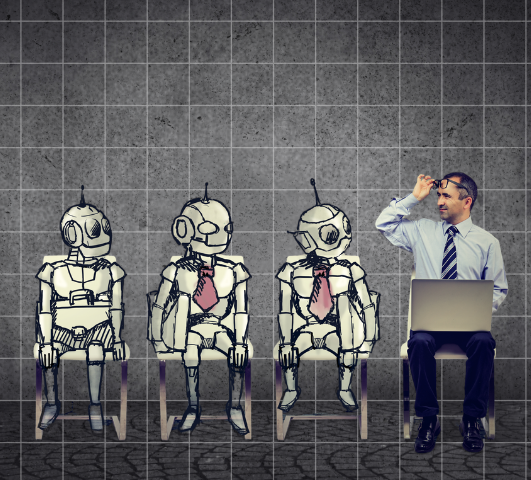
Every few months, a new headline drops claiming that AI has finally killed web development.

Developers are scrolling through Reddit, panicking. Business owners are wondering if they still need to hire anyone.

Career changers are second-guessing their decision to learn to code. And the AI hype machine keeps churning out content that conveniently leaves out the actual data.

Here's what the data actually says: the U.S. Bureau of Labor Statistics projects 7% growth for web developers and digital designers from 2024 to 2034 faster than the average for all occupations.

The website development services market is valued at $87.75 billion in 2026, up from $80.6 billion in 2025. And 55% of companies plan to actively grow their development teams this year. Website development is not dying.

But the future of web development looks nothing like it did three years ago, and AI in web development is the reason why. If you're a business owner, a developer, or someone trying to figure out whether to invest in a professional website development agency, you need to understand what's actually happening.

The Claim vs. The Data

Let's be blunt about where the "web dev is dead" narrative comes from.

It's not from economists. It's not from hiring managers. It's from viral LinkedIn posts, YouTube thumbnails, and content creators who discovered that fear generates clicks far better than nuance does.

The actual numbers tell a completely different story:

  • 7% projected employment growth for web developers from 2024 to 2034 the BLS calls this "much faster than average."
  • 14,500 new web developer job openings per year on average across the United States.
  • 29,400 additional new roles projected by 2026, according to CareerExplorer.
  • The software development employment category is projected to grow 17% from 2023 to 2033, adding approximately 327,900 jobs.
  • The global website development services market sits at $87.75 billion in 2026 not exactly a dying industry.

These aren't the numbers of a profession on life support. These are the numbers of a profession actively in demand, actively growing, and actively short on qualified talent.

What AI Can Actually Do in Website Development Right Now
Chicago website design

Let's be fair to AI, because it genuinely has changed things.

AI is already reshaping how development teams work. AI tools GitHub Copilot, ChatGPT, Claude, Cursor, Amazon Q are used by professional developers every day to move faster through their workflow.

These tools are powered by large language models that can read programming languages, understand framework patterns, and produce code snippets on demand.

The results are real. According to Colorlib's 2026 developer survey, 77% of developers now use AI tools regularly and report completing tasks 55% faster.

Here's what AI helps with and handles well today:

  • Writing boilerplate code: AI is able to generate the repetitive, predictable code structures that once ate hours of developer time. Frontend scaffolding, CSS resets, JavaScript utility functions, backend route templates AI handles these faster than any human.
  • Code explanation and debugging assistance: Helping developers understand unfamiliar codebases, read existing logic, and spot syntax errors faster.
  • Basic component generation: Producing HTML/CSS and JavaScript components from text prompts with reasonable accuracy within a defined framework.
  • Documentation writing: Automating the creation of code comments and technical documentation across development processes.
  • Testing and error identification: Flagging obvious issues in code before human review, saving QA cycles on predictable problems.

AI can automate a real and meaningful slice of the web development workflow. A developer using these tools today produces more in a day than the same developer could three years ago without them.

The latest generation of AI agents can even chain these tasks together generating a component, running basic tests, and flagging issues in a single automated sequence.

Developers who embrace AI as part of their process are working faster and billing more. Those who ignore it are falling behind.

But. There is a very large but.

What AI Still Cannot Do And This Is the Real Answer

AI's capability in website development has a ceiling. And that ceiling sits well below what any serious business website development project actually requires.

AI won't replace developers who do the complex, strategic work that real businesses actually need. Here's why.

AI can't replace human programmers who understand client goals, think through business problems, and make real-world architectural decisions with downstream consequences.

Rather than replacing skilled developers, AI is simply removing the need for the lowest-skill layer of the job.

Here's what AI genuinely cannot do reliably:

  • Problem-solving under real-world constraints: Architect a scalable, secure web system from scratch based on unique requirements, budget realities, and technical debt that already exists.
  • Handle complex tasks involving multiple system dependencies: Debug failures between third-party APIs, payment systems, and CMS platforms where the error isn't in the code it's in how the systems talk to each other.
  • Make strategic UX: Decisions that balance conversion optimization, brand identity, and behavioral psychology. Real creativity in interface design requires understanding client goals at a human level that AI models can't replicate.
  • Understand business context: knowing why features exist, what trade-offs are acceptable, and the downstream consequences of a technical decision. This kind of judgment is what separates a skilled developer from a code generator.
  • Write production-ready, secure code without expert review: Snyk's research shows that 40% of AI-generated code contains at least one critical security vulnerability. AI can generate code fast. Human developers make better decisions about whether that code is actually safe to ship.
  • Take accountability: A project, a deadline, and a live site that breaks at 11pm on launch day require a human programmer responsible for the outcome. AI won't call you back with a fix.

None of that is automatable yet. And none of it is likely to be automatable soon.

The honest framing: AI has automated the boring parts of web development. It has made the complex parts more complex, because it's raised the baseline expectation of what a website should do. 

Businesses that previously settled for a static five-page site now expect real-time personalization, seamless integrations, and sub-second load times. The bar has moved up, not down.

The Developer Job Market in 2026: What the Numbers Show

If AI were genuinely replacing web developers, you'd expect to see it in the hiring data. You don't.

  • 55% of companies plan to grow their development teams in 2026, not shrink them.
  • Full-stack developer salaries average $95,000-$115,000 annually, with senior roles at $130,000-$160,000.
  • Developers with AI/ML integration skills command a 25-35% salary premium over those without.
  • 72% of web developers work remotely at least part-time, expanding the talent pool nationally.
  • There are approximately 27.7 million software developers worldwide as of 2025, projected to reach 45 million by 2030, a near-doubling of the workforce.

The pattern is consistent: AI tools are making individual developers more productive, which means companies need fewer mediocre developers and more excellent ones.

The floor is dropping. The ceiling is rising. Whether you're a frontend programmer, a backend engineer, or a full stack developer if you use AI well, 2026 is one of the best years in the history of this profession to be doing this work.

How Web Development Has Actually Changed
Web Development Chicago

Web development hasn't died. It's shifted. And the shift has real implications for what clients should expect and what developers need to know.

What's becoming less valuable:

  • Manual, repetitive HTML and CSS work that tools can generate faster.
  • Generic templates work with no customization, strategy, or performance engineering.
  • Developers who refuse to use AI tools as part of their workflow.

What's becoming more valuable:

  • Developers who understand business goals and build to serve them not just execute instructions.
  • Specialists in performance engineering, Core Web Vitals, and conversion optimization.
  • Professional full stack developers who can own a project end-to-end.
  • Web designers who understand conversion data and user behavior, not just visual aesthetics.
  • Professionals who master new technologies like AI integration, headless architecture, and real-time personalization.
  • Anyone who leans into AI as a productivity tool rather than treating it as a threat.

The developers and web designers who lean into AI who learn to direct it, review its output critically, and apply judgment where AI falls short are the ones building the strongest careers right now.

This is what professional website development looks like in 2026. It's more strategic, more accountable, and more connected to business outcomes than the "write some HTML and move on" version of the job that AI is genuinely capable of replacing.

Why Business Owners Should Still Invest in Professional Developers

If you're a business owner reading this and thinking "maybe I can just use AI to build my website" here's the honest answer: you can use it to build something. You probably shouldn't use it to build something you're going to rely on.

A few things that matter to your business that AI can't independently handle:

  • Mobile friendly website design: Actually performs well on real devices across real networks. AI can generate responsive CSS. It can't test it the way a real human across multiple devices does or make the judgment calls that turn "technically responsive" into "actually pleasant on a phone."
  • Security: 40% of AI-generated code has at least one critical security vulnerability. If your website collects any customer data, processes payments, or connects to any business system, that's not a statistic you want to test personally.
  • Local SEO architecture: An AI can write meta descriptions. It doesn't understand why your Chicago-area keywords need a fundamentally different hierarchy than your national content.
  • Brand coherence: A site that looks like it was assembled by prompting a chatbot looks like it was assembled by prompting a chatbot. Your customers will feel that before they can articulate it.

The No-Code and DIY Ceiling

Website Design Chicago

Let's also address the "why not just use Wix or Webflow website development?" question, since AI has made those platforms more capable.

No-code and AI-assisted builders are genuinely useful for:

  • Early-stage businesses validating an idea on a minimal budget.
  • Solo professionals who need a basic informational presence online.
  • Simple landing pages with a single conversion goal.
  • Internal tools with minimal security requirements.

But they hit the ceiling quickly. Custom business logic, complex integrations, specific performance benchmarks, accessibility compliance, and brand-differentiated design all require code and the judgment of someone who can architect it properly.

The real question for your business isn't "can I build something with AI?" It's "does what AI can build serve my business well enough to stake revenue on it?" For most businesses doing meaningful transaction volume, the honest answer is no.

What Chicago Businesses Should Know

Chicago's business environment is competitive. Whether you're in retail, professional services, healthcare, hospitality, or tech your competitors are actively investing in their digital infrastructure.

Chicago Website development services in 2026 aren't about having something online. They're about having something that performs that loads fast, ranks locally, converts visitors, and scales with your growth.

A digital agency in Chicago that understands both the technical evolution happening in website development and the commercial context of a competitive local market builds differently than a freelancer using AI templates. The output looks different, performs differently, and holds up differently six months after launch.

Chicago website design services built by a team that treats AI as a productivity tool rather than a replacement for expertise deliver what AI alone never will: accountability, strategy, and a direct line of communication when something goes wrong.

Our website design and development services are built on exactly this approach professional-grade technical execution, enhanced by AI tools that make our team faster, not replaced by AI tools that make the work shallower.

UX Design in the Age of AI: The Skill That Can't Be Prompted Away

Here's one more thing worth saying clearly: UX design is becoming more valuable, not less, in an AI-dominated web environment.

Why? Because AI can generate interfaces. It cannot generate empathy. It can create layouts. It cannot conduct user research, interpret behavioral data, or make the design judgment calls that turn a confusing checkout flow into one that converts at 4%.

UX design service work the research, strategy, information architecture, usability testing, and iterative refinement behind interfaces that actually work is deeply human work.

The human touch in that process, the empathy for real users, the judgment calls that no prompt can replicate, the ability to read between the lines of what a client actually needs is exactly what AI cannot simulate.

As AI floods the market with functional-but-mediocre interfaces, the premium on genuinely excellent UX is rising, not falling.

If you're evaluating what type of web design and development investment your business actually needs, the UX layer is where cutting corners shows up most immediately in revenue through higher bounce rates, lower time-on-site, and conversion rates that never reach their potential.

AI Didn't Kill Web Development. It Changed the Stakes.
Website Development Chicago

The noise around "AI replacing developers" makes for great headlines. The reality is more interesting and more useful: AI has raised the bar for what professional website development can deliver, lowered the cost of mediocre web work, and widened the gap between the two.

For business owners, this means the question isn't "do I need a developer?" It's "do I need a developer good enough to leverage AI well and build something that actually serves my business?"

Design Henge is a digital agency in Chicago building websites and digital user experiences for businesses ready to stop settling. We use AI where it helps. We apply human expertise where it matters. And we take accountability for the outcomes, not just the deliverables.

FAQs

Is AI replacing web developers in 2026?

No, the data doesn't support it. The Bureau of Labor Statistics projects 7% growth for web developers from 2024 to 2034, with 14,500 average annual openings in the US. 55% of companies plan to grow their development teams in 2026. What AI is doing is replacing the repetitive, low-skill parts of website development boilerplate code, basic templates, and documentation while increasing demand for developers who can handle the complex, strategic, and security-critical work that AI handles poorly.

Can AI build a complete business website without a developer?

AI tools can generate components of a website code snippets, copywriting, basic layouts. But a production-ready, secure, performance-optimized business website development requires human architecture, integration work, QA testing, and strategic judgment that AI cannot independently provide. Snyk's research shows 40% of AI-generated code contains critical security vulnerabilities. For a business website handling real traffic, real customer data, or real commercial transactions, AI-only builds carry meaningful technical and security risk.

Are no-code platforms like Wix or Webflow good enough for my business website?

For some businesses early-stage companies, solo practitioners, simple informational sites yes. They've matured significantly and handle basic needs well. But they hit real ceilings around custom functionality, complex integrations, serious SEO performance, and brand differentiation. For businesses generating meaningful revenue where the website is a primary sales or lead channel, professional development typically pays for itself quickly through improved conversion rates.

Should I hire a website design and development company if AI can do the work?

AI can do some of the work and a good website design and development company uses it to work faster. What you're hiring for isn't code generation. You're hiring for strategy, accountability, security expertise, UX judgment, and a team that's responsible for the outcome not just the output. A site that AI generates in an afternoon and a site that a professional team builds over eight weeks are not equivalent products, and the difference shows up in how they perform for your business.

What should I look for when hiring web developers in 2026?

Look for developers and agencies that use AI tools confidently as productivity multipliers, not crutches. Ask to see portfolio sites tested in Google PageSpeed Insights. Ask specifically about their security practices and post-launch support. Look for demonstrated understanding of your business goals, not just technical capability. And be skeptical of anyone who can quote you a price and timeline before asking a single question about your requirements. That's the AI-template approach, regardless of whether they're honest about it.


Mir Murtaza
Fueled by innovation and strategy, a visionary leader drives brand success, marketing excellence, and lasting impact.
Have an idea?
Let's collaborate!
Got a concept you’re passionate about? We’re here to bring it to life with creativity and precision. Collaborate with us and watch your vision transform into reality.
Thank you! Your submission has been received!
Oops! Something went wrong while submitting the form.
Guide & Tips
Jun 3, 2026

Is Webdev Dead Due to AI?

Will AI replace web developers? Explore how AI affects web development. Learn if AI will take over, or assist developers in the future of web dev.

Is Webdev Dead Due to AI?

Every few months, a new headline drops claiming that AI has finally killed web development.

Developers are scrolling through Reddit, panicking. Business owners are wondering if they still need to hire anyone.

Career changers are second-guessing their decision to learn to code. And the AI hype machine keeps churning out content that conveniently leaves out the actual data.

Here's what the data actually says: the U.S. Bureau of Labor Statistics projects 7% growth for web developers and digital designers from 2024 to 2034 faster than the average for all occupations.

The website development services market is valued at $87.75 billion in 2026, up from $80.6 billion in 2025. And 55% of companies plan to actively grow their development teams this year. Website development is not dying.

But the future of web development looks nothing like it did three years ago, and AI in web development is the reason why. If you're a business owner, a developer, or someone trying to figure out whether to invest in a professional website development agency, you need to understand what's actually happening.

The Claim vs. The Data

Let's be blunt about where the "web dev is dead" narrative comes from.

It's not from economists. It's not from hiring managers. It's from viral LinkedIn posts, YouTube thumbnails, and content creators who discovered that fear generates clicks far better than nuance does.

The actual numbers tell a completely different story:

  • 7% projected employment growth for web developers from 2024 to 2034 the BLS calls this "much faster than average."
  • 14,500 new web developer job openings per year on average across the United States.
  • 29,400 additional new roles projected by 2026, according to CareerExplorer.
  • The software development employment category is projected to grow 17% from 2023 to 2033, adding approximately 327,900 jobs.
  • The global website development services market sits at $87.75 billion in 2026 not exactly a dying industry.

These aren't the numbers of a profession on life support. These are the numbers of a profession actively in demand, actively growing, and actively short on qualified talent.

What AI Can Actually Do in Website Development Right Now

Chicago website design

Let's be fair to AI, because it genuinely has changed things.

AI is already reshaping how development teams work. AI tools GitHub Copilot, ChatGPT, Claude, Cursor, Amazon Q are used by professional developers every day to move faster through their workflow.

These tools are powered by large language models that can read programming languages, understand framework patterns, and produce code snippets on demand.

The results are real. According to Colorlib's 2026 developer survey, 77% of developers now use AI tools regularly and report completing tasks 55% faster.

Here's what AI helps with and handles well today:

  • Writing boilerplate code: AI is able to generate the repetitive, predictable code structures that once ate hours of developer time. Frontend scaffolding, CSS resets, JavaScript utility functions, backend route templates AI handles these faster than any human.
  • Code explanation and debugging assistance: Helping developers understand unfamiliar codebases, read existing logic, and spot syntax errors faster.
  • Basic component generation: Producing HTML/CSS and JavaScript components from text prompts with reasonable accuracy within a defined framework.
  • Documentation writing: Automating the creation of code comments and technical documentation across development processes.
  • Testing and error identification: Flagging obvious issues in code before human review, saving QA cycles on predictable problems.

AI can automate a real and meaningful slice of the web development workflow. A developer using these tools today produces more in a day than the same developer could three years ago without them.

The latest generation of AI agents can even chain these tasks together generating a component, running basic tests, and flagging issues in a single automated sequence.

Developers who embrace AI as part of their process are working faster and billing more. Those who ignore it are falling behind.

But. There is a very large but.

What AI Still Cannot Do And This Is the Real Answer

AI's capability in website development has a ceiling. And that ceiling sits well below what any serious business website development project actually requires.

AI won't replace developers who do the complex, strategic work that real businesses actually need. Here's why.

AI can't replace human programmers who understand client goals, think through business problems, and make real-world architectural decisions with downstream consequences.

Rather than replacing skilled developers, AI is simply removing the need for the lowest-skill layer of the job.

Here's what AI genuinely cannot do reliably:

  • Problem-solving under real-world constraints: Architect a scalable, secure web system from scratch based on unique requirements, budget realities, and technical debt that already exists.
  • Handle complex tasks involving multiple system dependencies: Debug failures between third-party APIs, payment systems, and CMS platforms where the error isn't in the code it's in how the systems talk to each other.
  • Make strategic UX: Decisions that balance conversion optimization, brand identity, and behavioral psychology. Real creativity in interface design requires understanding client goals at a human level that AI models can't replicate.
  • Understand business context: knowing why features exist, what trade-offs are acceptable, and the downstream consequences of a technical decision. This kind of judgment is what separates a skilled developer from a code generator.
  • Write production-ready, secure code without expert review: Snyk's research shows that 40% of AI-generated code contains at least one critical security vulnerability. AI can generate code fast. Human developers make better decisions about whether that code is actually safe to ship.
  • Take accountability: A project, a deadline, and a live site that breaks at 11pm on launch day require a human programmer responsible for the outcome. AI won't call you back with a fix.

None of that is automatable yet. And none of it is likely to be automatable soon.

The honest framing: AI has automated the boring parts of web development. It has made the complex parts more complex, because it's raised the baseline expectation of what a website should do. 

Businesses that previously settled for a static five-page site now expect real-time personalization, seamless integrations, and sub-second load times. The bar has moved up, not down.

The Developer Job Market in 2026: What the Numbers Show

If AI were genuinely replacing web developers, you'd expect to see it in the hiring data. You don't.

  • 55% of companies plan to grow their development teams in 2026, not shrink them.
  • Full-stack developer salaries average $95,000-$115,000 annually, with senior roles at $130,000-$160,000.
  • Developers with AI/ML integration skills command a 25-35% salary premium over those without.
  • 72% of web developers work remotely at least part-time, expanding the talent pool nationally.
  • There are approximately 27.7 million software developers worldwide as of 2025, projected to reach 45 million by 2030, a near-doubling of the workforce.

The pattern is consistent: AI tools are making individual developers more productive, which means companies need fewer mediocre developers and more excellent ones.

The floor is dropping. The ceiling is rising. Whether you're a frontend programmer, a backend engineer, or a full stack developer if you use AI well, 2026 is one of the best years in the history of this profession to be doing this work.

How Web Development Has Actually Changed

Web Development Chicago

Web development hasn't died. It's shifted. And the shift has real implications for what clients should expect and what developers need to know.

What's becoming less valuable:

  • Manual, repetitive HTML and CSS work that tools can generate faster.
  • Generic templates work with no customization, strategy, or performance engineering.
  • Developers who refuse to use AI tools as part of their workflow.

What's becoming more valuable:

  • Developers who understand business goals and build to serve them not just execute instructions.
  • Specialists in performance engineering, Core Web Vitals, and conversion optimization.
  • Professional full stack developers who can own a project end-to-end.
  • Web designers who understand conversion data and user behavior, not just visual aesthetics.
  • Professionals who master new technologies like AI integration, headless architecture, and real-time personalization.
  • Anyone who leans into AI as a productivity tool rather than treating it as a threat.

The developers and web designers who lean into AI who learn to direct it, review its output critically, and apply judgment where AI falls short are the ones building the strongest careers right now.

This is what professional website development looks like in 2026. It's more strategic, more accountable, and more connected to business outcomes than the "write some HTML and move on" version of the job that AI is genuinely capable of replacing.

Why Business Owners Should Still Invest in Professional Developers

If you're a business owner reading this and thinking "maybe I can just use AI to build my website" here's the honest answer: you can use it to build something. You probably shouldn't use it to build something you're going to rely on.

A few things that matter to your business that AI can't independently handle:

  • Mobile friendly website design: Actually performs well on real devices across real networks. AI can generate responsive CSS. It can't test it the way a real human across multiple devices does or make the judgment calls that turn "technically responsive" into "actually pleasant on a phone."
  • Security: 40% of AI-generated code has at least one critical security vulnerability. If your website collects any customer data, processes payments, or connects to any business system, that's not a statistic you want to test personally.
  • Local SEO architecture: An AI can write meta descriptions. It doesn't understand why your Chicago-area keywords need a fundamentally different hierarchy than your national content.
  • Brand coherence: A site that looks like it was assembled by prompting a chatbot looks like it was assembled by prompting a chatbot. Your customers will feel that before they can articulate it.

The No-Code and DIY Ceiling

Website Design Chicago

Let's also address the "why not just use Wix or Webflow website development?" question, since AI has made those platforms more capable.

No-code and AI-assisted builders are genuinely useful for:

  • Early-stage businesses validating an idea on a minimal budget.
  • Solo professionals who need a basic informational presence online.
  • Simple landing pages with a single conversion goal.
  • Internal tools with minimal security requirements.

But they hit the ceiling quickly. Custom business logic, complex integrations, specific performance benchmarks, accessibility compliance, and brand-differentiated design all require code and the judgment of someone who can architect it properly.

The real question for your business isn't "can I build something with AI?" It's "does what AI can build serve my business well enough to stake revenue on it?" For most businesses doing meaningful transaction volume, the honest answer is no.

What Chicago Businesses Should Know

Chicago's business environment is competitive. Whether you're in retail, professional services, healthcare, hospitality, or tech your competitors are actively investing in their digital infrastructure.

Chicago Website development services in 2026 aren't about having something online. They're about having something that performs that loads fast, ranks locally, converts visitors, and scales with your growth.

A digital agency in Chicago that understands both the technical evolution happening in website development and the commercial context of a competitive local market builds differently than a freelancer using AI templates. The output looks different, performs differently, and holds up differently six months after launch.

Chicago website design services built by a team that treats AI as a productivity tool rather than a replacement for expertise deliver what AI alone never will: accountability, strategy, and a direct line of communication when something goes wrong.

Our website design and development services are built on exactly this approach professional-grade technical execution, enhanced by AI tools that make our team faster, not replaced by AI tools that make the work shallower.

UX Design in the Age of AI: The Skill That Can't Be Prompted Away

Here's one more thing worth saying clearly: UX design is becoming more valuable, not less, in an AI-dominated web environment.

Why? Because AI can generate interfaces. It cannot generate empathy. It can create layouts. It cannot conduct user research, interpret behavioral data, or make the design judgment calls that turn a confusing checkout flow into one that converts at 4%.

UX design service work the research, strategy, information architecture, usability testing, and iterative refinement behind interfaces that actually work is deeply human work.

The human touch in that process, the empathy for real users, the judgment calls that no prompt can replicate, the ability to read between the lines of what a client actually needs is exactly what AI cannot simulate.

As AI floods the market with functional-but-mediocre interfaces, the premium on genuinely excellent UX is rising, not falling.

If you're evaluating what type of web design and development investment your business actually needs, the UX layer is where cutting corners shows up most immediately in revenue through higher bounce rates, lower time-on-site, and conversion rates that never reach their potential.

AI Didn't Kill Web Development. It Changed the Stakes.

Website Development Chicago

The noise around "AI replacing developers" makes for great headlines. The reality is more interesting and more useful: AI has raised the bar for what professional website development can deliver, lowered the cost of mediocre web work, and widened the gap between the two.

For business owners, this means the question isn't "do I need a developer?" It's "do I need a developer good enough to leverage AI well and build something that actually serves my business?"

Design Henge is a digital agency in Chicago building websites and digital user experiences for businesses ready to stop settling. We use AI where it helps. We apply human expertise where it matters. And we take accountability for the outcomes, not just the deliverables.

FAQs

Is AI replacing web developers in 2026?

No, the data doesn't support it. The Bureau of Labor Statistics projects 7% growth for web developers from 2024 to 2034, with 14,500 average annual openings in the US. 55% of companies plan to grow their development teams in 2026. What AI is doing is replacing the repetitive, low-skill parts of website development boilerplate code, basic templates, and documentation while increasing demand for developers who can handle the complex, strategic, and security-critical work that AI handles poorly.

Can AI build a complete business website without a developer?

AI tools can generate components of a website code snippets, copywriting, basic layouts. But a production-ready, secure, performance-optimized business website development requires human architecture, integration work, QA testing, and strategic judgment that AI cannot independently provide. Snyk's research shows 40% of AI-generated code contains critical security vulnerabilities. For a business website handling real traffic, real customer data, or real commercial transactions, AI-only builds carry meaningful technical and security risk.

Are no-code platforms like Wix or Webflow good enough for my business website?

For some businesses early-stage companies, solo practitioners, simple informational sites yes. They've matured significantly and handle basic needs well. But they hit real ceilings around custom functionality, complex integrations, serious SEO performance, and brand differentiation. For businesses generating meaningful revenue where the website is a primary sales or lead channel, professional development typically pays for itself quickly through improved conversion rates.

Should I hire a website design and development company if AI can do the work?

AI can do some of the work and a good website design and development company uses it to work faster. What you're hiring for isn't code generation. You're hiring for strategy, accountability, security expertise, UX judgment, and a team that's responsible for the outcome not just the output. A site that AI generates in an afternoon and a site that a professional team builds over eight weeks are not equivalent products, and the difference shows up in how they perform for your business.

What should I look for when hiring web developers in 2026?

Look for developers and agencies that use AI tools confidently as productivity multipliers, not crutches. Ask to see portfolio sites tested in Google PageSpeed Insights. Ask specifically about their security practices and post-launch support. Look for demonstrated understanding of your business goals, not just technical capability. And be skeptical of anyone who can quote you a price and timeline before asking a single question about your requirements. That's the AI-template approach, regardless of whether they're honest about it.